

Gestational Diabetes Mellitus (GDM) is a condition in which blood sugar levels become high during pregnancy, even if the woman never had diabetes before. In India, GDM is increasingly common due to lifestyle changes, dietary habits, and genetic factors.
When diagnosed early and managed properly, both mother and baby can remain healthy throughout pregnancy. This blog explains gestational diabetes in simple terms, including symptoms, causes, normal sugar levels, diet, and daily care tips.
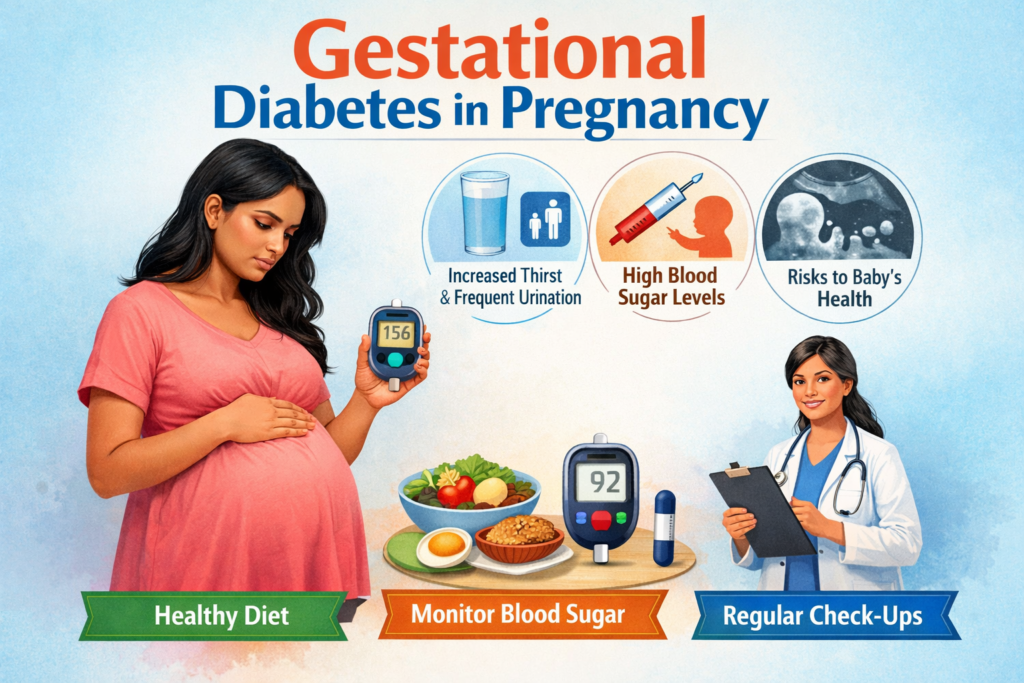
What Is Gestational Diabetes Mellitus (GDM)?
Gestational diabetes is a type of diabetes that develops only during pregnancy, usually between 24 and 28 weeks. It occurs when pregnancy hormones interfere with the body’s ability to use insulin effectively, leading to high blood sugar levels.
In most cases, GDM goes away after delivery, but it needs careful monitoring during pregnancy.
Common Symptoms of GDM in Pregnancy
Many women with gestational diabetes do not experience noticeable symptoms. However, some common signs may include:
- Excessive thirst
- Frequent urination
- Tiredness and fatigue
- Blurred vision
- Repeated infections
Since these symptoms can also occur in a normal pregnancy, blood sugar testing is the most reliable way to detect GDM.
Normal Blood Sugar Levels During Pregnancy
Doctors usually recommend maintaining blood sugar levels within the following ranges:
- Fasting blood sugar: Below 95 mg/dL
- 1 hour after meals: Below 140 mg/dL
- 2 hours after meals: Below 120 mg/dL
Maintaining these levels helps reduce risks for both mother and baby.
Causes and Risk Factors of GDM
You may have a higher risk of developing gestational diabetes if you:
- Are above 25 years of age
- Have a family history of diabetes
- Have PCOS or thyroid-related issues
- Were overweight before pregnancy
- Had gestational diabetes in a previous pregnancy
However, even women without these risk factors can develop GDM, which is why routine screening is important.
GDM Diet Plan for Pregnancy (Indian Foods)
Diet plays a crucial role in managing gestational diabetes.
Foods to Include
- Millets such as ragi, foxtail millet, and barnyard millet
- Whole wheat chapati
- Vegetables like beans, carrot, cucumber, spinach, and gourds
- Protein sources such as eggs, paneer, curd, dal, fish, and chicken
- Healthy fats including nuts, seeds, and small amounts of ghee
Foods to Avoid
- Large portions of white rice
- Sugar, sweets, honey, and jaggery
- Fruit juices and sweetened beverages
- Bakery items and refined flour products
Eating small, frequent meals instead of large portions helps keep blood sugar stable.
Can Gestational Diabetes Affect the Baby?
If gestational diabetes is not well controlled, it may lead to:
- Excessive baby weight (macrosomia)
- Preterm delivery
- Low blood sugar levels in the baby after birth
- Increased risk of type 2 diabetes later in life
Good blood sugar control during pregnancy significantly reduces these risks.
How to Manage Gestational Diabetes Daily
- Monitor blood sugar levels as advised by your doctor
- Follow a balanced GDM-friendly diet
- Include light physical activity such as walking or prenatal yoga
- Take medicines or insulin only if prescribed
- Attend regular prenatal check-ups
Consistency in daily care is essential for managing GDM effectively.
Does Gestational Diabetes Go Away After Delivery?
In most women, blood sugar levels return to normal after childbirth. However, doctors recommend testing blood sugar levels again 6 to 12 weeks after delivery.
Women who had GDM have a higher risk of developing type 2 diabetes later in life, so maintaining a healthy lifestyle is important even after pregnancy.
Frequently Asked Questions About GDM
Is gestational diabetes common in India?
Yes, India has a high prevalence of gestational diabetes due to genetic and lifestyle factors.
Can gestational diabetes be controlled without insulin?
Many women are able to control GDM through diet and physical activity alone.
Is walking safe during a GDM pregnancy?
Yes, walking for 15 to 30 minutes after meals is commonly recommended to help control blood sugar levels.
Conclusion
Gestational diabetes in pregnancy can feel stressful, but with timely diagnosis, a balanced diet, and proper medical care, it is completely manageable. Consistent monitoring and healthy lifestyle choices help ensure a safe pregnancy and a healthy baby.